
How AI and Smart Machines Are Changing Farming Forever:
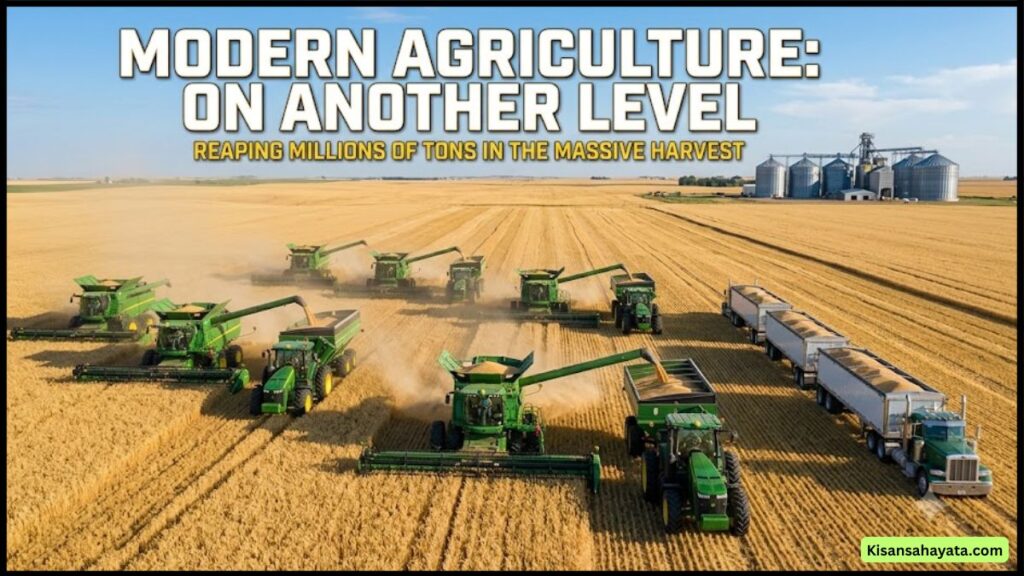
Modern Agriculture Machines on Another Level: If you’ve been farming for a while, you already know one thing: hard work alone isn’t enough anymore.
These days, the farmers making the biggest profits aren’t necessarily working longer hours—they’re working smarter. With modern equipment, artificial intelligence (AI), GPS technology, and automated harvesting systems, farms around the world are producing more food than ever before while reducing labor costs and minimizing waste.
Every year, farmers worldwide harvest nearly 2.5 billion tons of grains, fruits, and vegetables. That kind of production isn’t possible without advanced agricultural technology.
Let’s take a look at some of the incredible machines and farming methods that are transforming modern agriculture.
Smarter Orchard Management:
Growing fruit is only half the job. Harvesting it quickly without damaging the crop is just as important.
That’s why commercial orchards rely on specialized equipment designed for speed, efficiency, and fruit quality.
Apple Harvesting:
Washington State is one of the world’s largest apple-producing regions.
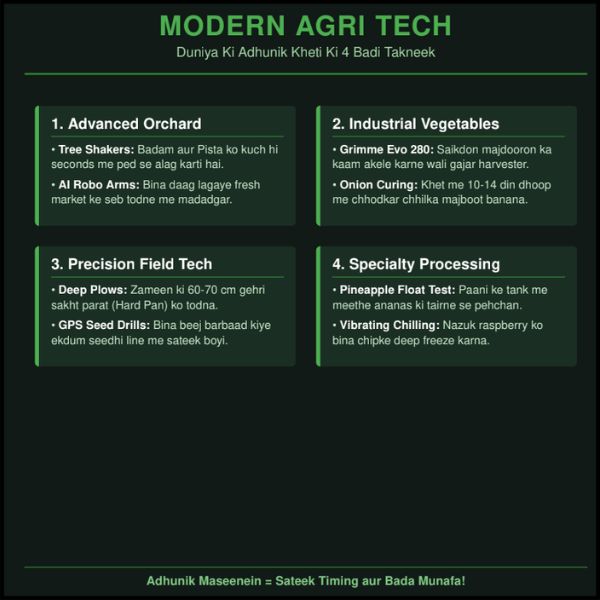
For apples destined for juice processing, growers often use massive tree shakers that gently vibrate the tree, allowing thousands of apples to fall onto collection systems. A single machine can harvest 10 to 15 tons of apples in one day.
Fresh-market apples require much more care. Many orchards now use AI-powered robotic arms and advanced catching systems that carefully pick each apple without bruising it, helping maintain premium quality.
Almond Production:
California produces roughly 80% of the world’s almonds, making efficiency essential during harvest.
Large hydraulic shakers grip each tree and shake loose thousands of almonds in seconds. Mechanical sweepers then gather the nuts into neat rows before harvesters collect them.
Inside processing facilities, computer vision systems and robotic sorting machines inspect every almond, instantly removing damaged or defective nuts.
Pistachio Harvesting:
Pistachios are especially vulnerable to mold if they touch the ground.
To solve this problem, harvesting machines use hydraulic shakers equipped with giant umbrella-shaped catch frames. As the tree is shaken, every pistachio falls directly into the catcher instead of landing on the soil, helping preserve quality and food safety.
Precision Tree Pruning:
Healthy trees require consistent sunlight and airflow.
Modern pruning machines equipped with hydraulic arms and high-speed circular saws can trim entire orchards in a fraction of the time it would take a manual crew, while keeping tree rows uniform and maximizing future yields.
Industrial Vegetable Harvesting:
Labor shortages have become one of agriculture’s biggest challenges.
Instead of relying on hundreds of seasonal workers, today’s farms increasingly use specialized harvesting machines.
Carrots:
Machines like the Grimme Evo 280 harvest carrots in one continuous operation.
They pull carrots from the soil, remove excess dirt, trim the leafy tops, and load the finished product directly into trailers—all in a single pass.
What once required hundreds of workers can now be completed by one operator and one machine.
Onion Harvesting:
Onions follow a slightly different process.
After being lifted from the ground, they’re left in the field for 10 to 14 days during a process called curing. This allows the outer skin to dry and harden, greatly improving storage life.
Once curing is complete, harvesting equipment gathers and loads the onions for transportation.
Peanut Harvesting:
Peanut harvesting happens in two stages.
First, digger-shaker machines lift the plants from the soil and flip them upside down so the peanuts can dry naturally.
Later, combine harvesters separate the peanuts from the vines, processing up to six tons per hour under ideal conditions.
Sweet Corn:
Timing is everything with sweet corn.
Within just one day after harvest, sweet corn can lose nearly half of its natural sweetness.
That’s why many commercial farms operate like moving assembly lines, processing and packaging corn within 8 to 12 hours of harvesting to preserve flavor and freshness.
Precision Farming Technology:
Modern farming begins long before harvest.
Today’s most successful farms rely on technology that ensures every seed, every drop of water, and every inch of soil is used efficiently.
Also read – How AI and Smart Machines Changed the Way We Farm
Deep Soil Preparation:
Over time, heavy equipment creates compacted soil layers that restrict root growth.
Deep tillage equipment breaks through these hardpan layers, while shallow tillage prepares the topsoil for ideal seed placement.
Healthy soil means stronger roots and healthier crops.
GPS-Guided Planting:
Modern seed drills from companies like John Deere and Väderstad use GPS guidance and advanced sensors to place every seed at the perfect spacing and depth.
The result is straighter rows, fewer skipped areas, lower seed waste, and more consistent crop growth.
Smart Irrigation:
Center Pivot Irrigation systems have transformed farming in dry regions across the United States.
A single rotating irrigation system can water more than 130 hectares (320 acres) while delivering consistent moisture across the entire field.
This technology has helped turn previously dry land into highly productive farmland.
Processing Delicate Fruits:
Some fruits require extra care because even minor damage can reduce their value.
Raspberries:
Raspberries are incredibly delicate.
Mechanical harvesters use gentle vibration systems that encourage ripe berries to fall without crushing them.
However, berries destined for premium fresh markets are still picked by hand.
After harvesting, specialized cooling tunnels and vibrating conveyor systems quickly freeze the berries individually, preventing them from sticking together.
Pineapples:
Growing a pineapple isn’t a quick process—it typically takes 18 to 24 months before it’s ready for harvest.
Inside processing plants, pineapples are sorted before high-speed machines peel, core, and slice them within seconds.
Every step is designed to maximize efficiency while minimizing waste.
Sunflowers:
Sunflower heads contain thousands of seeds arranged in a fascinating spiral pattern found throughout nature.
Specialized harvesters collect the flower heads and feed them directly into threshing systems, where the seeds are separated quickly and efficiently.
The Biggest Lesson for Farmers:
Most family farms don’t need million-dollar machinery to become more profitable.
The real takeaway is understanding how technology improves efficiency.
Planting at the right time, preparing healthy soil, reducing harvest losses, using water wisely, and protecting crop quality after harvest can significantly increase profits—even without investing in the largest equipment.
As AI, robotics, GPS technology, drones, and automation continue to evolve, modern farming will become even more efficient.
The future of agriculture isn’t about replacing farmers.
It’s about giving farmers better tools to produce more food, reduce waste, and build stronger, more profitable operations for generations to come.