
How AI and Smart Machines Changed the Way We Farm: If you had walked onto our farm twenty years ago, you would have seen a lot more people than machines. During harvest season, everyone in the family pitched in, and we hired extra hands whenever we could. Farming was all about hard work, long days, and hoping the weather stayed on our side.
Fast forward to today, and things look completely different.
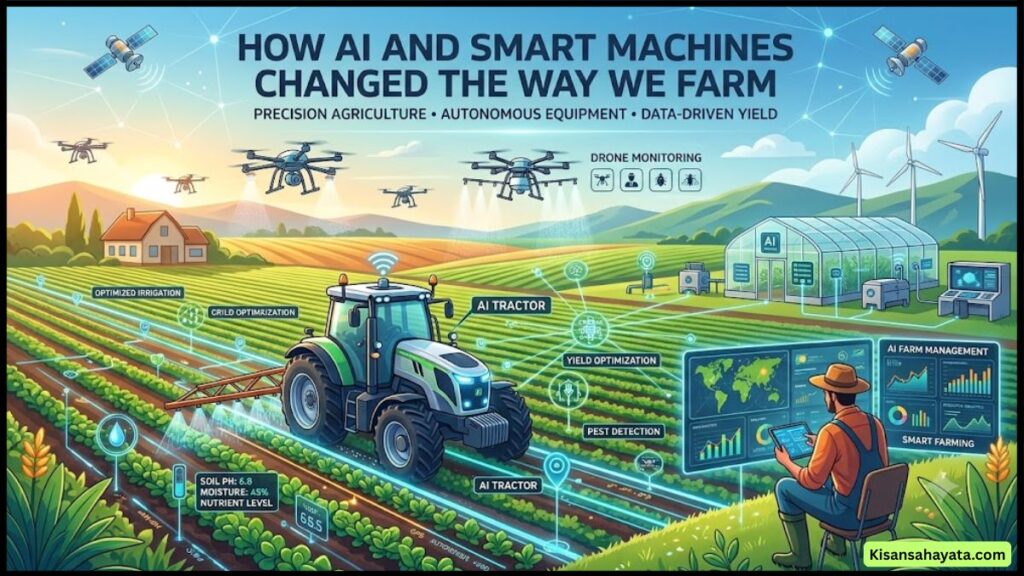
We still work just as hard, but now we have technology doing many of the repetitive jobs. AI, GPS, smart sensors, and automated equipment have become part of everyday farming. They’re not replacing farmers—they’re helping us make better decisions and get more done in less time.
Apple Harvesting Has Become Smarter
Apple season used to be one of the busiest times of the year. Picking fruit by hand took days, and even experienced workers could accidentally bruise apples.
Now, many orchards use AI-powered cameras that scan every apple on the tree. The system can tell which apples are ready to pick and which ones need a few more days.
Robotic arms carefully grab the ripe apples without damaging them. That means more premium-quality fruit reaches grocery stores instead of ending up in juice factories.
For growers, better quality usually means better prices.
Almond Farming Runs Like a Well-Planned System
If you’ve ever driven through California during almond harvest, you’ve probably seen huge machines moving through the orchards.
The process starts with a tree shaker that gently shakes the trunk, causing ripe almonds to fall to the ground. Another machine follows behind, collecting everything quickly and efficiently.
Once the almonds reach the processing facility, AI takes over again.
High-speed cameras inspect every single almond. If one has a crack, mold, insect damage, or any other defect, it’s automatically removed before packaging.
The entire process is faster, more accurate, and far more consistent than it used to be.
Delicate Crops Still Need a Human Touch
Not every crop can be harvested entirely by machines.
Raspberries are a great example.
Fresh raspberries are so soft that even a little pressure can damage them. That’s why many farms still rely on hand-picking for fruit sold fresh.
However, raspberries grown for freezing are often harvested using specialized machines that gently shake ripe berries loose without causing too much damage.
It’s a good reminder that technology works best when it’s matched to the right job.
Harvesting Vegetables Is Faster Than Ever
Modern vegetable harvesters have changed the game for crops like carrots and onions.
Carrot harvesters pull the roots from the soil, remove excess dirt, trim the tops, and load everything in one smooth operation.
Onions follow a slightly different process. Machines lift them from the ground and leave them in rows to dry naturally. A few days later, another machine collects the onions and transports them to storage.
This system saves time, reduces labor costs, and helps improve storage quality.
GPS Makes Every Seed Count
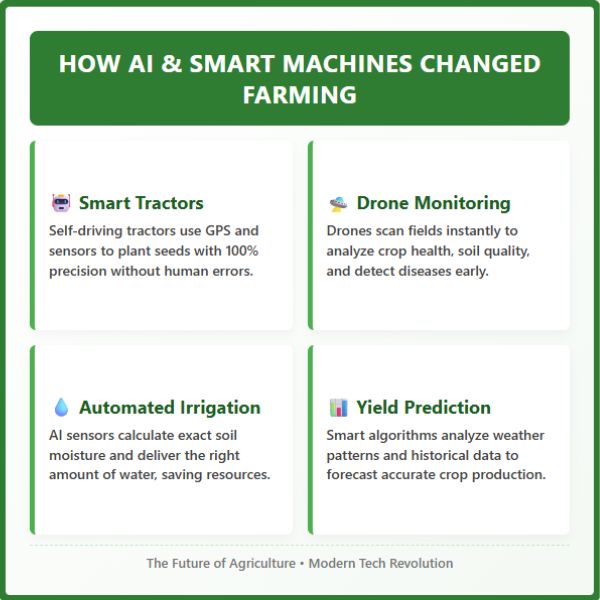
One of the biggest improvements we’ve made on our farm is GPS-guided planting.
Years ago, planting perfectly straight rows depended on the operator’s experience.
Today, our equipment handles most of that work automatically.
Seeds are planted at exactly the right depth and spacing, giving every plant enough room to grow. That leads to healthier crops while reducing seed waste.
It may sound like a small improvement, but across hundreds or thousands of acres, those savings add up quickly.
Water Is Used More Wisely
Water has become one of the most valuable resources in farming.
Instead of watering an entire field the same way, many farms now use moisture sensors to monitor soil conditions.
If one area needs water and another doesn’t, the irrigation system adjusts automatically.
In many parts of the western United States, center pivot irrigation systems have made it possible to grow crops in areas that once seemed too dry for farming.
Using less water while growing more food is one of the biggest wins modern agriculture has achieved.
AI Helps Spot Problems Before Farmers Do
One of the most useful tools we have today isn’t a tractor or a combine.
It’s artificial intelligence.
AI systems analyze thousands of images from drones, field cameras, and sensors every day.
They can often detect disease, pest damage, or nutrient deficiencies before those problems become visible to the human eye.
Catching issues early means we can fix them before they spread across the field.
That saves both money and crops.
Processing Plants Are Smarter Too
Technology doesn’t stop once the crop leaves the field.
Inside modern food processing plants, AI-powered cameras inspect fruits and vegetables at incredible speed.
Every item is checked for size, color, shape, and quality.
Anything that doesn’t meet the standard is automatically removed.
That means customers receive better products, and farmers earn more from high-quality harvests.
What We’ve Learned From Farming With Technology
After years of using these tools, one thing has become clear.
Technology doesn’t replace experience.
It makes experience more valuable.
We still watch the weather.
We still walk our fields.
We still make the important decisions.
But now we have better information to help us make those decisions with confidence.
The Future of Farming Looks Bright
Farming has never stopped evolving.
Our grandparents relied on horses.
Our parents relied on tractors.
Today we’re relying on AI, GPS, robotics, drones, and smart equipment.
Tomorrow’s farms will likely be even more connected, more efficient, and more sustainable.
At the end of the day, though, the goal hasn’t changed.
We’re still trying to grow healthy food, take care of the land, and leave the farm in better shape for the next generation.
Technology is simply helping us do that a little better every year.
Frequently Asked Questions
Is AI really being used on farms in the United States?
Yes. Many commercial farms now use AI for crop monitoring, precision irrigation, yield prediction, quality inspection, and automated harvesting.
Do robots replace farm workers?
Not completely. Robots handle repetitive and physically demanding tasks, but farmers are still responsible for planning, monitoring, and managing the operation.
Why is GPS so important in modern farming?
GPS helps equipment plant, spray, and harvest with incredible accuracy, reducing waste while improving crop yields.
Are smart farming technologies only for large farms?
Large farms adopted them first, but many affordable tools are now available for smaller farms as well.
What is the biggest benefit of modern farming technology?
The biggest advantage is producing more food with fewer resources while improving quality, reducing waste, and making farming more efficient.